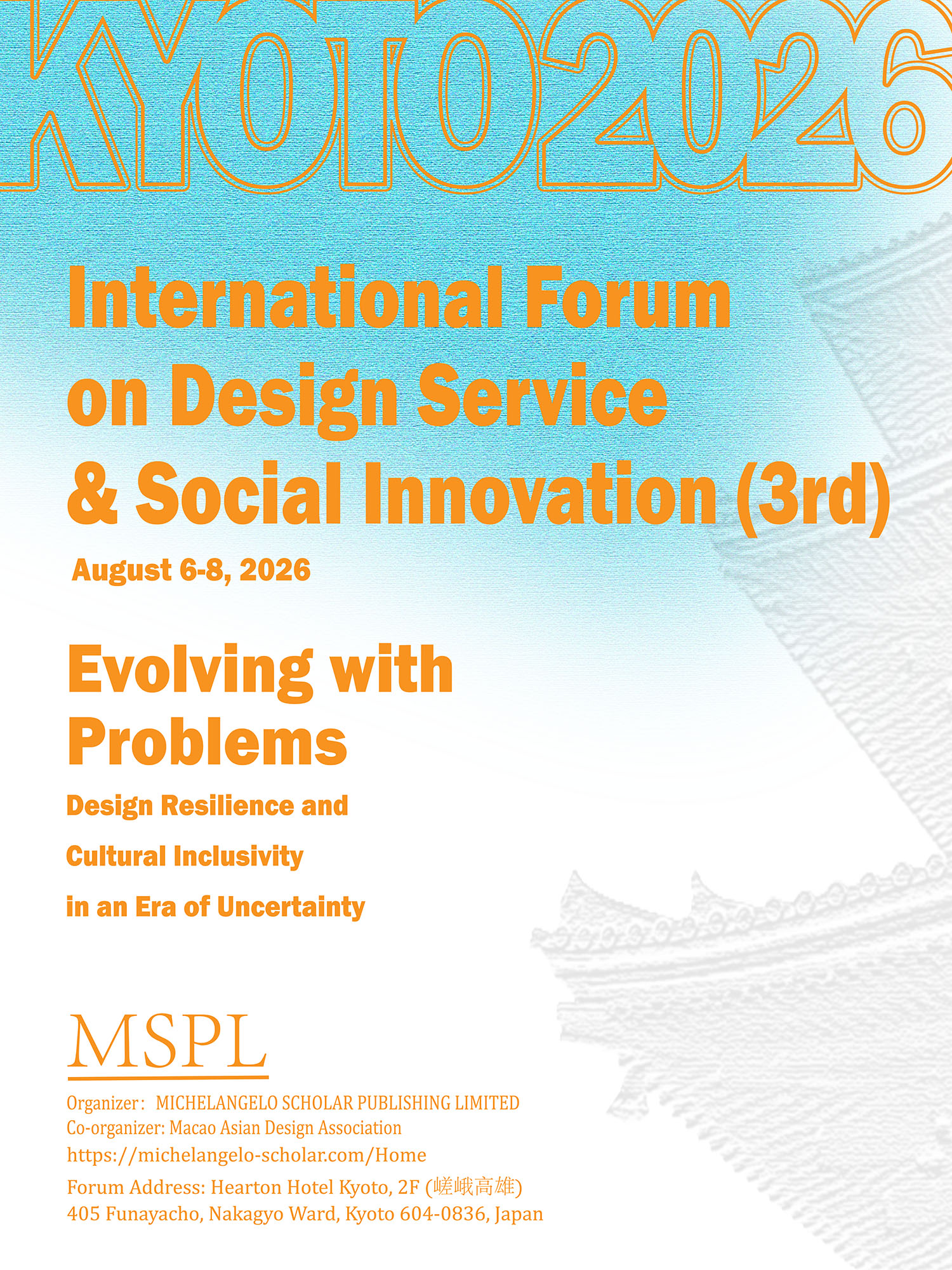
KYOTO 2026: International Forum on Design Service & Social Innovation (3rd) was successfully held in Kyoto, Japan. The forum brought together more than 30 experts and scholars (including online participants) from universities, research institutions, and enterprises across Asia, the Americas, Australia, and Europe. As a new initiative, the forum gathered scholars from diverse cultural and professional backgrounds with the aim of deepening mutual understanding and broadening professional perspectives through in-depth exchange and dialogue.
During the forum, participants engaged in substantive discussions centered on the theme of “Design Service and Social Innovation.” Topics covered the strategic reframing of service blueprinting, the integration of local knowledge with digital media, cultural resilience and intercultural collaboration, as well as the role of design in addressing loneliness, alienation, and sustainability crises. Participants generally agreed that design should no longer be confined to delivering superficial experiences or driving cycles of consumption, but should instead serve as a bridge connecting people, people with place, and people with meaning. Through workshops, case presentations, and critical reflection, we intentionally fostered deeper exploration of the differences between (Eastern and Western) design thinking and their distinct pursuits. At the same time, participants jointly examined how design can help construct more resilient and human-centered social relations and organizational forms amid complex and uncertain realities. We firmly believe that in an age of uncertainty, design should focus more on people’s genuine material and spiritual needs rather than inducing endless consumption.
The forum was not only an exchange of professional knowledge but also a meaningful intellectual resonance across different cultural contexts. Scholars from various regions identified many shared concerns and potential pathways during their conversations: how design can truly serve communities rather than become a market strategy of capital; how cultural specificity can be preserved while enabling intercultural co-creation; and how small-scale project research can be transformed into sustainable social action. These discussions have laid a solid foundation for future collaborative research, joint publications, and ongoing exchange.
We look forward to using this Kyoto forum as a starting point to continuously advance international dialogue in the fields of design services and social innovation. We welcome more scholars and practitioners to join us in reflecting on the challenges of our time: in an uncertain era marked by material excess and a scarcity of meaning, what can design truly contribute to our shared human future?

Group photo of some of the experts at the forum (a few participants who arrived later are not included).

Professor Lily Díaz-Kommonen speaking at the forum
As stated in the announcement of this forum, in an age of uncertainty, we seek dialogue and understanding across different cultural contexts. This forum represents a new attempt to bring together scholars from diverse cultural and professional backgrounds, engaging in open and in-depth exchange to collectively address the role and responsibility of design in contemporary society.
We seek to move beyond single cultural perspectives and existing disciplinary boundaries, finding resonance in difference and sparking new thinking through encounter. The forum is not merely a sharing of knowledge, but a shared exploration of how design can respond to complex realities and connect people with meaning. It is precisely through such intercultural dialogue that we are able to re-examine the possibilities of design—it should not serve only efficiency and consumption, but become a vital force for fostering understanding, building resilience, and responding to the genuine needs of humanity.
We thank all the experts for their efforts in traveling long distances to gather in Kyoto. At next year’s forum, we will continue to explore related themes in greater depth.